
Brouwerij Boon
Brewery
About this Brewery
Place: Lembeek
Brouwerij Boon grew out of Frank Boon’s determination to preserve the lambic and gueuze traditions of the Senne Valley at a time when they were in serious decline. In 1972 he began blending gueuze in a small cellar in Halle, inspired by René De Vits, one of the region’s remaining gueuze blenders.
In 1975 Boon took over De Vits’s business and established himself as an independent gueuze blender. He later moved operations to Lembeek, where he gradually rebuilt stocks of maturing lambic and developed plans to brew his own wort rather than rely entirely on other producers.
In 1990 Boon completed the first new lambic brewhouse built in the region for more than forty years, an important moment in the revival of traditional gueuze. A much larger brewhouse followed in 2013 as demand continued to grow. Over time, the brewery also expanded its stock of large oak foeders, used to mature lambic for blending.
Frank Boon retired in 2021, handing day-to-day control to his sons Jos and Karel. The brewery remains family-run and continues to combine traditional spontaneous fermentation and long oak maturation with modern brewing technology. Today Boon is one of the major producers of traditional lambic, Oude Geuze and Oude Kriek, with more than two million litres of lambic maturing in its foeder warehouses.
As the brewery built up its stock of foeders, maintenance became a specialist challenge in its own right. These huge oak vessels need major refurbishment roughly every fifteen years, and the traditional cooperage skills needed to do that had become increasingly scarce. Boon therefore created its own cooper’s workshop. The brewery says Frank Boon, his son Jos and their trained team became uniquely capable in Belgium of maintaining Boon’s foeders using traditional methods.
Frank Boon had learned the craft decades earlier from one of the last local coopers, acquiring both tools and practical knowledge that might otherwise have disappeared. Over time, that developed from repairing small barrels to working on foeders holding tens of thousands of litres.
Boon is therefore not only preserving lambic brewing, it is also preserving part of the specialist craftsmanship that makes traditional lambic production possible.
Although Boon built its reputation on preserving traditional lambic, the brewery has never treated that tradition as a reason to stand still. The family had assisted with the production of Halle’s historic Duivelsbier during the 1990s and took over the brand in 2003 after its previous producer closed. Boon itself describes the decision as both an act of preserving local brewing heritage and recognition of the beer’s commercial potential.
That approach has become still more visible under the next generation. Since 2023 Boon has invested in new branding, production and wider distribution for Duivelsbier, developing it into a range that includes blond, brown and Wild versions. The latter even draws the two sides of the brewery together, using Brettanomyces selected from Boon’s old lambic barrels. It is an interesting example of a brewery preserving a highly traditional form of Belgian beer while remaining willing to adapt, diversify and develop new markets.
Address: Fonteinstraat 65, 1502 Lembeek
Glasses in this collection
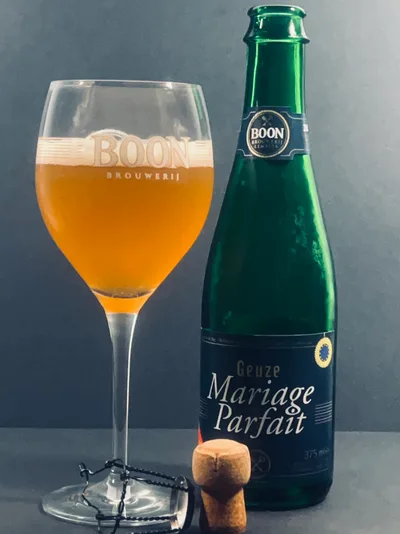
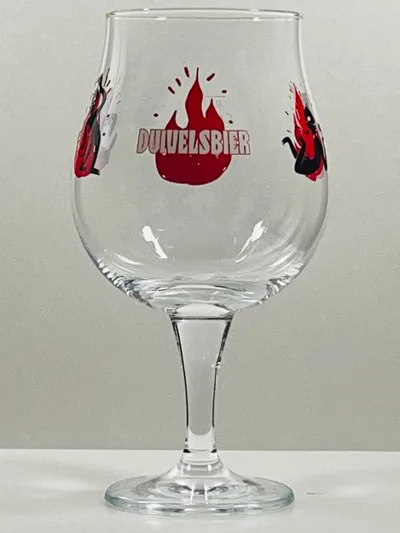

Curator's Note
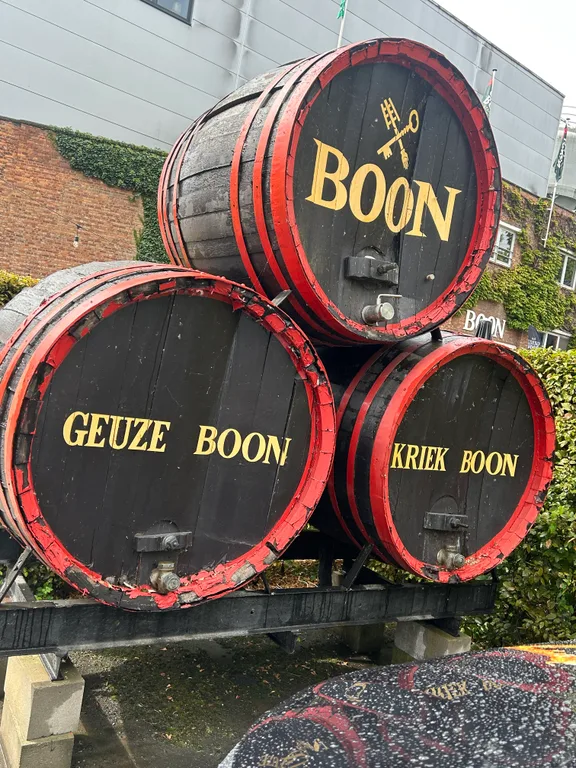
The brewery shop is well stocked with numerous styles of Boon beer, as well as glasses, T-shirts and other merch. The staff are friendly and happy to spend time explaining the different brews and offering recommendations.
There is a bar up a short flight of stairs from the shop where you can sit and sample the various beers. One member of staff suggested it as a good way to decide which ones to buy — tempting, but sadly impractical for me as I was driving.
The brewery offers tours twice a day when it is open, one in English and one in Dutch. Check the website for current opening times and tour details before travelling. Advance booking is not essential, although it may be worth doing to make sure of a place.