Brasserie de Silly
Brewery
About this Brewery
Place: Silly
Brasserie de Silly is a historic family brewery in the Hainaut village of Silly, with a brewing tradition dating to 1850. Now operated by the sixth generation of the Van der Haegen family, it combines a substantial brewing heritage with an unusually diverse range of traditional and contemporary Belgian beers.
The brewery was established by Marcellin Meynsbrughen at Cense de la Tour, a local farm where brewing developed alongside agricultural activities. This reflected a longstanding tradition in rural Hainaut, where farms brewed beer for their workers and surrounding communities.
By the beginning of the twentieth century, brewing had become an increasingly important part of the family business. Adelin Meynsbrughen received recognition at the Paris Universal Exhibition in 1900, while successive generations expanded production and improved the brewery's facilities.
During the First World War, the family reportedly coated its copper brewing kettles with black pitch to prevent their confiscation by German forces. The deception succeeded, and the brewery continued operating, supplying beer and supporting other local brewers during the occupation.
The brewery also traces the origins of its distinctive Silly Scotch to the end of the war. According to the brewery's account, British soldiers stationed nearby requested a Scotch-style beer, helping inspire a recipe developed with an English soldier named Jack Payne. The beer remains an important part of the brewery's identity.
In 1947, brewing finally overtook farming as the principal activity of the business. The brewery's traditional range included saison, grisette and Scotch-style ales, but production subsequently expanded to include bottom-fermented beers. The introduction of pilsner during the 1950s reflected changing Belgian drinking habits and the growing importance of lager.
The brewery adopted its present name in 1973. Two years later, it acquired Brasserie Tennstedt Decroes in nearby Enghien, bringing the established Double Enghien beers into its portfolio.
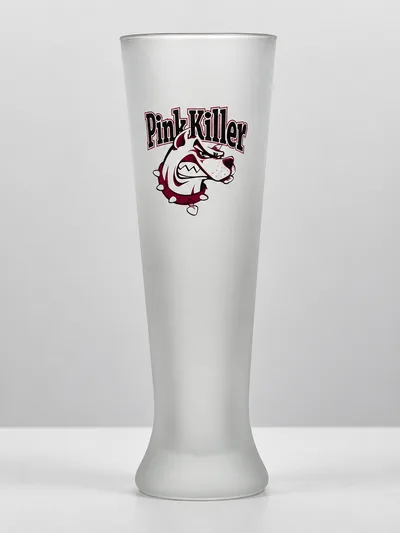
Further diversification followed. The introduction of Titje wheat beer, subsequently renamed Blanche de Silly, and La Divine in the early 1990s broadened the range. Pink Killer, a fruit beer made with pink grapefruit, appeared in 2004, followed by Green Killer IPA in 2014 and Triple SWAF in 2016.
Today, the brewery produces an extensive selection of Belgian beers, including traditional styles, speciality ales, fruit beers, organic products and alcohol-free alternatives. Its range also includes Abbaye de Forest, associated with the historic abbey in Brussels.
The business is now led by cousins Bertrand and Lionel Van der Haegen, representing the sixth generation of the brewing family. Bertrand oversees production, while Lionel is responsible for commercial development and marketing.
The brewery celebrated its 175th anniversary in 2025, marking the occasion with further investment in its production facilities. A new brewhouse, with a capacity of 70 hectolitres per batch, forms part of a programme of modernisation intended to improve efficiency and reduce the environmental impact of production.
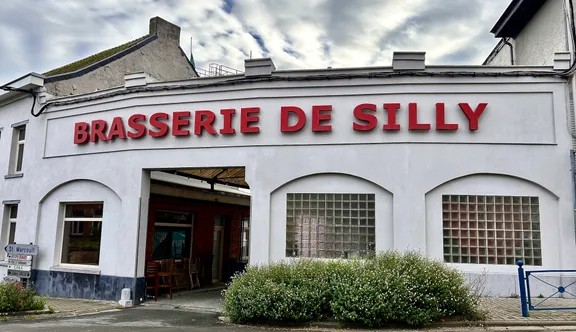
Despite its considerable growth and international reach, Brasserie de Silly remains firmly rooted in the village where it began. Its historic buildings, substantial production facilities and striking contemporary branding reflect a brewery that has continued to develop while retaining its family identity.
Address: Rue Ville Basse 2 7830 Silly
Tel: +32 68 25 04 80
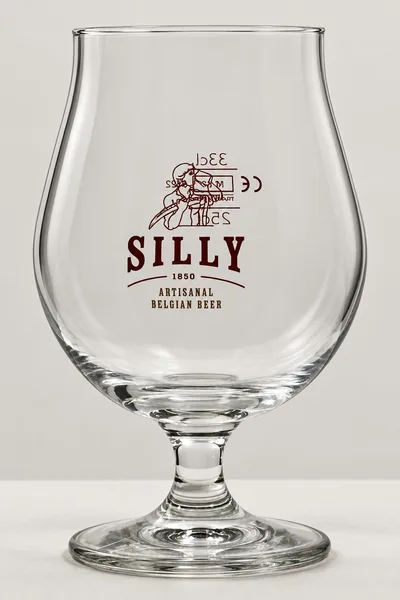
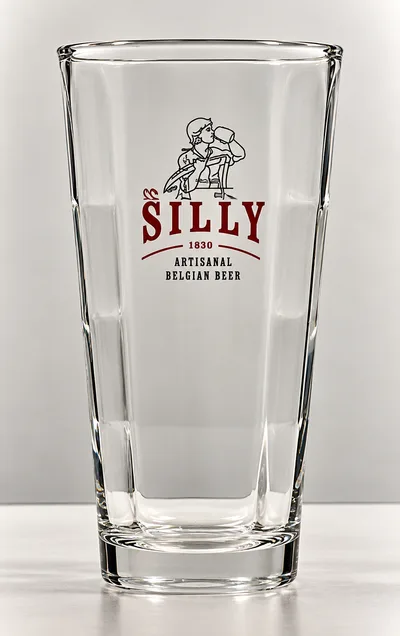
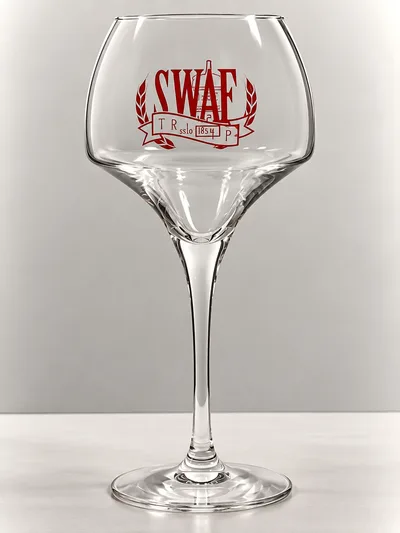
Glasses in this collection
Curator's Note
Brasserie de Silly remains a working brewery rather than a conventional visitor attraction, although guided tours are available for groups of at least 15 people by advance arrangement. Tours explain the brewing and packaging processes and include opportunities to sample the brewery's beers.
The brewery also sells beer and branded glassware directly to visitors, although the arrangements are rather different from those of a typical brewery shop.
During my visit in October 2026, I discovered that there is no conventional retail shop where visitors can browse individual bottles and merchandise. Instead, purchases are handled through an office within the brewery's working premises.
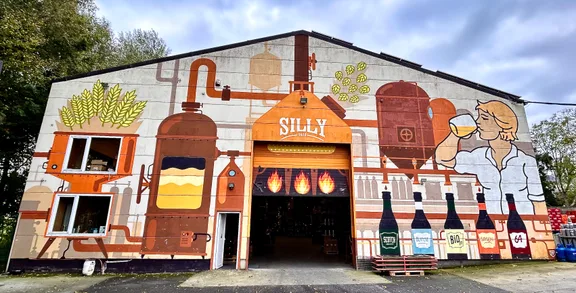
Finding the sales point requires a little exploration. The brewery occupies several buildings around the village centre, including its prominent frontage on Rue Ville Basse. The sales office is located within the production compound, in the building distinguished by a large, colourful mural illustrating the brewing process.
The mural is a useful landmark. It covers the front of a warehouse-style building and includes illustrations of brewing equipment, ingredients and Silly beer bottles. Visitors should look for the small pedestrian entrance immediately to the left of the large warehouse doorway, where staff can direct them to the appropriate office.
Beer is sold in cases of 24 bottles rather than individually, while branded glasses can be purchased separately. Availability varies, so visitors seeking a particular beer or glass may wish to contact the brewery beforehand.
Although the arrangements are less straightforward than at breweries with dedicated visitor shops, the opportunity to purchase directly from the producer makes a visit worthwhile for enthusiasts interested in the brewery's extensive range.
The nearby Café de la Brasserie and Taverne de la Sille provide opportunities to enjoy Silly beers in the village.