Brasserie Cantillon
Brasserie
About this Brewery
Place: Brussels
Brasserie Cantillon was founded in Brussels in 1900 and has remained a family brewery ever since. It specialises in traditional lambic beers produced by spontaneous fermentation, using historic equipment and methods that have changed remarkably little since the brewery’s early years.
By the 1970s, traditional lambic and gueuze had fallen badly out of fashion. In 1978, Jean-Pierre Van Roy and supporters created the Brussels Museum of the Gueuze within the brewery, both to preserve the brewing tradition and to help secure Cantillon’s own future. The working brewery effectively became a living museum, combining production with education about lambic brewing.
Cantillon subsequently became one of the best-known standard-bearers for traditional lambic and gueuze. Today it describes itself as the last lambic brewery operating in Brussels, while the brewery and museum attract visitors from around the world. Production remains deliberately traditional, with copper brewing vessels, wooden barrels and spontaneous fermentation central to its identity.
Address: Rue Gheude 56 1070 Brussels
Glasses in this collection


Curator's Note
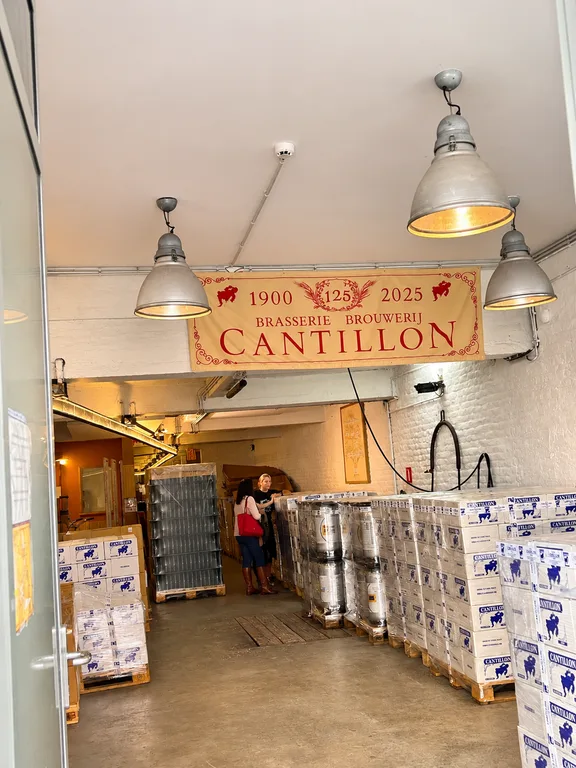
Brasserie Cantillon and the Brussels Museum of the Gueuze, to give the brewery its full name, is about a 20-minute walk from the centre of Brussels, in Anderlecht, not far from Gare du Midi. The rather low-key entrance gives way to a traditional working brewery, with a shop and reception area selling lambic, gueuze and fruit beers, alongside merchandise and glasses. A small menu shows which beers are available and in what bottle sizes.
The staff are extremely friendly and knowledgeable. I spent some time talking to them about the beers on offer and the differences between the various styles. They were also keen to set my expectations: these are not necessarily the lambic beers you may have experienced from a supermarket.
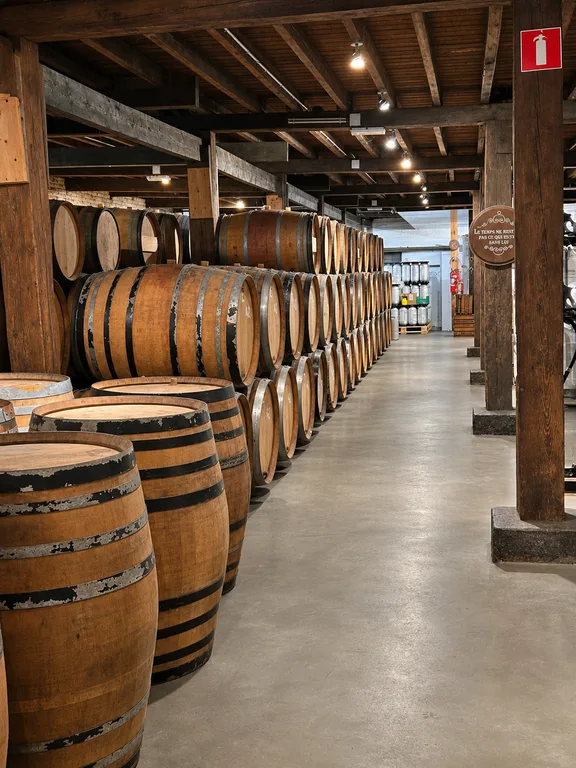
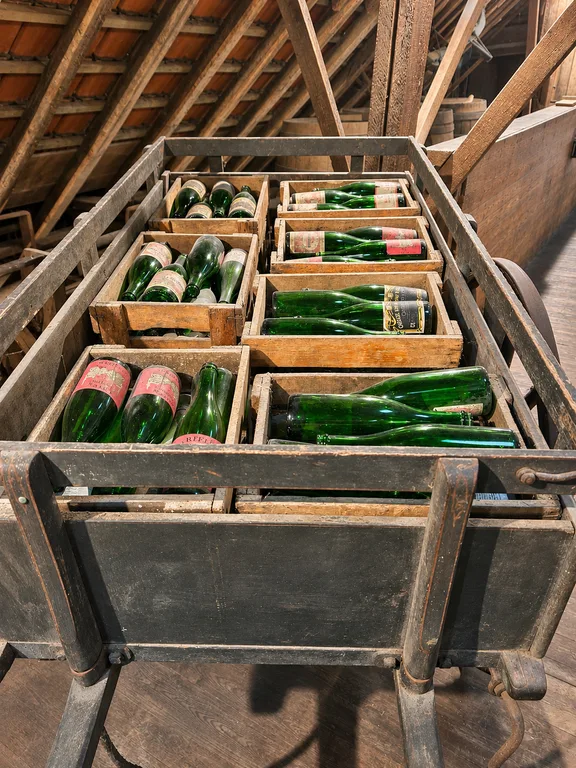
The self-guided tour is particularly worthwhile. Visitors receive an informative booklet that guides them through numbered rooms and areas of the brewery, explaining the equipment, brewing methods and history of lambic production in Brussels. This is very much a working brewery rather than a polished visitor attraction. You may encounter staff going about their work, with barrels, brewing equipment and extraordinary quantities of bottles stored throughout the building.
Lambic brewing is sufficiently different from most other brewing traditions that there is a great deal to learn. The tour explains spontaneous fermentation, the importance of wooden barrels and the relatively short brewing season, when sufficiently cold overnight temperatures allow the wort to cool naturally and encourage the right conditions for fermentation. It also gives some insight into the limited production of traditional lambic and the international demand for these beers.
Allow 30–40 minutes for the self-guided tour, plus additional time to enjoy the three included samples in the spacious and rather inviting bar area. On my visit, these were a traditional lambic, a gueuze and a kriek. Visitors can also buy drinks in the bar without taking the tour.
Self-guided tours currently cost €9 and are available on Mondays, Tuesdays, Thursdays and Fridays without advance booking. Guided tours are offered on Saturdays, cost €13 and must be booked in advance. Check the brewery's website for current opening times and arrangements before visiting.
When I visited, the shop was also selling a small range of fruit vinegars made from its lambic beers.
This one isn't for your pooch! Dog's aren't allowed in the brewery and I'd recommend leaving them behind even if you're just dropping into the shop.