
Glass Styles
Belgian beer glasses come in all manner of styles and shapes. We have tried to identify some of the most common and distinctive forms and describe them here. This list is neither exhaustive nor authoritative, but should help you understand how different glass styles relate to the beers we drink from them.
“The beer glass itself should never distract from what really is at stake: the content, beer!”
Ale Glass
A versatile, usually straight-sided glass with a wide opening, designed for easy drinking while leaving room for a good head and the beer's aroma.
Ale glasses are among the most adaptable beer glass shapes, typically with a simple straight-sided or gently curved body and a relatively wide opening. The open shape provides room for a foamy head and allows aromas to develop, while making the glass comfortable for everyday drinking. Unlike more specialised shapes, such as goblets or Pilsner glasses, there is no single defining form: proportions, curves and bases vary considerably. Traditional versions include familiar pint and pub-style glasses, while modern Belgian breweries increasingly use taller, slimmer or more elegantly shaped interpretations for a wide range of ales. The boundaries with other categories can therefore be particularly blurred, and terms such as ale glass, beer glass and pint glass are often used differently by manufacturers and drinkers.
Type Specimen
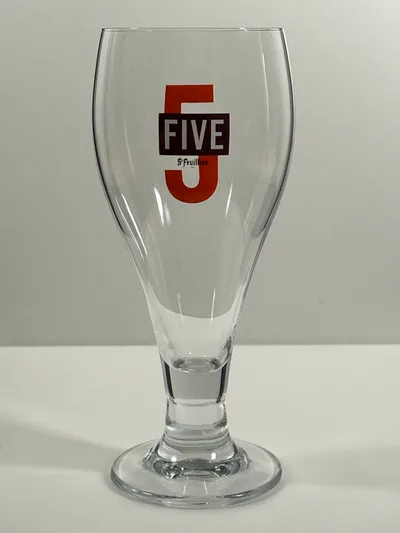
BBG100
St Feuillien Five
View exhibitBalloon
A rounded, stemmed glass with a generous bowl, designed to concentrate aromas while leaving ample room for the beer's head.
Balloon glasses are characterised by a large, rounded bowl that narrows towards the rim, helping collect and concentrate the beer's aromas. The generous bowl also provides space for a substantial head, while the stem allows the glass to be held without warming the beer as quickly with the hand. They are commonly associated with aromatic, stronger or more complex Belgian ales, where aroma forms an important part of the drinking experience. Shapes vary considerably: some are almost spherical, while others are taller and closer to an oversized wine glass. This creates considerable overlap with goblets and other stemmed beer glasses, and the term balloon describes the characteristic rounded bowl more reliably than a rigidly defined glass shape.
Type Specimen
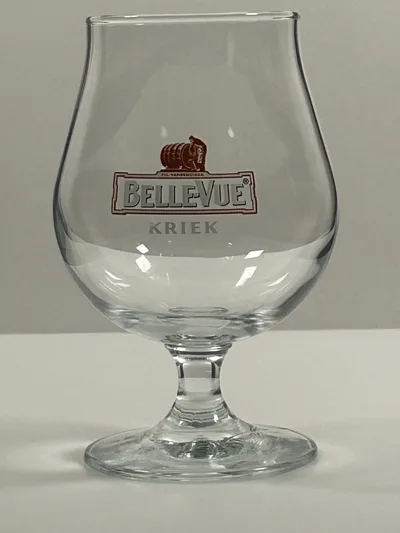
BBG013
Belle Vue Kriek Balloon
View exhibitFlute
A tall, narrow glass designed to showcase a beer's clarity and lively bubbles while helping retain its carbonation and foamy head.
Flute glasses have a tall, narrow body, usually carried on a stem, which gives rising bubbles a long and highly visible path through the beer. The relatively narrow opening helps retain carbonation and supports a persistent head, while the stem allows the drinker to hold the glass without warming the beer as quickly. The form is particularly suited to lively, highly carbonated beers and is also used when appearance and presentation are important. Belgian interpretations range from very slender, champagne-like flutes to broader and more substantial designs, creating some overlap with Pilsner and other tall stemmed glasses. What generally distinguishes the flute is the combination of a narrow bowl, elongated proportions and a stem.
Type Specimen
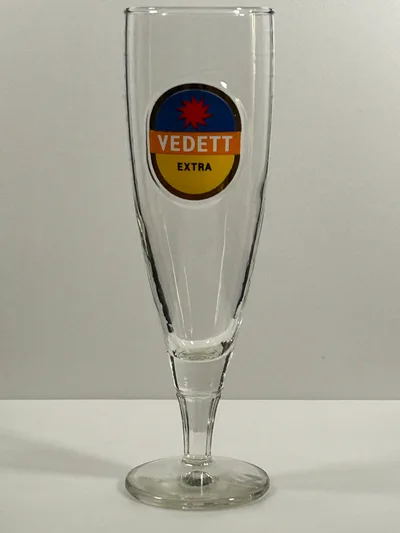
BBG024
Vedett
View exhibitGoblet
A stemmed glass with a broad bowl, traditionally associated with stronger Belgian beers, particularly Trappist and abbey ales.
Goblets traditionally combine a broad bowl with a substantial stem and foot, giving them a heavier, more imposing appearance than many other stemmed beer glasses. The generous bowl provides space for the beer’s aromas to develop and usually leaves ample room for a substantial head. They are particularly associated with Belgian Trappist and abbey beers, where the weight and proportions of the glass can also give the serving a sense of ceremony.
Modern goblets vary considerably. Many use slimmer stems, lighter construction and more elongated bowls, sometimes resembling oversized wine glasses while retaining the broad proportions of the traditional form. Their use has also spread well beyond Trappist and abbey ales.
Chalice is frequently used as an alternative name, particularly for heavier or more ornate examples, but there is no precise boundary between a goblet and a chalice.
Type Specimen
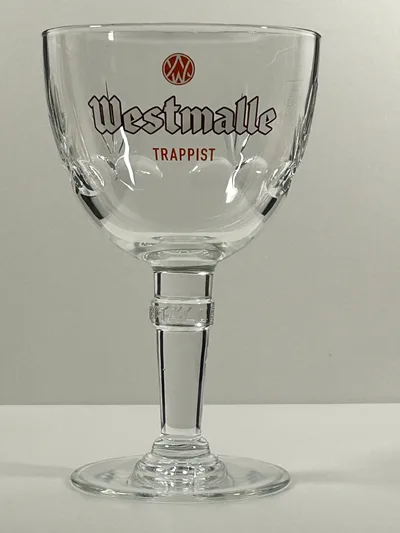
BBG025
Westmalle Trappist
View exhibitLambic
A straight-sided tumbler traditionally associated with lambic beers, designed for simple, generous drinking rather than elaborate presentation.
Lambic glasses are typically sturdy, straight-sided tumblers with a relatively wide opening and little or no taper. Their uncomplicated form suits the traditional service of lambic and gueuze, providing ample room for a foamy head while allowing the beer's complex aromas to develop freely. The substantial glass and broad base also make them practical, robust drinking vessels rather than delicate tasting glasses. Many resemble everyday water glasses or small tumblers, reflecting lambic's historic place as a local Brussels and Pajottenland drink rather than a beer requiring ceremonial glassware. Modern lambic producers use a variety of shapes, however, including stemmed glasses, so the term describes a strong tradition rather than a universal rule.
Type Specimen
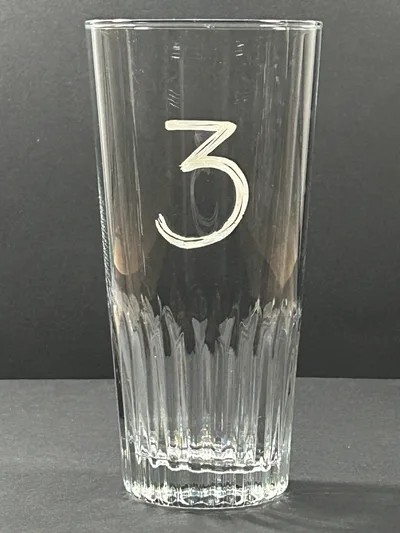
BBG164
3 Fonteinen lambic glass
View exhibitPilsner
A tall, slender glass showcasing a Pilsner's clarity, lively carbonation and foamy head.
Pilsner glasses are typically tall and slender, showing off the beer's clarity and colour while helping streams of carbonation remain visible as they rise through the glass. The relatively narrow body helps preserve the beer's effervescence, while the wider opening provides room for its foamy head and allows its aroma to develop. They are often straight-sided or gently tapered, narrowing towards a solid base, although shapes and proportions vary considerably. Closely associated with Pilsners and other pale lagers, the style has increasingly blurred into the wider family of lager glasses, with modern breweries using everything from ribbed and contoured designs to more elegant stemmed forms.
Type Specimen
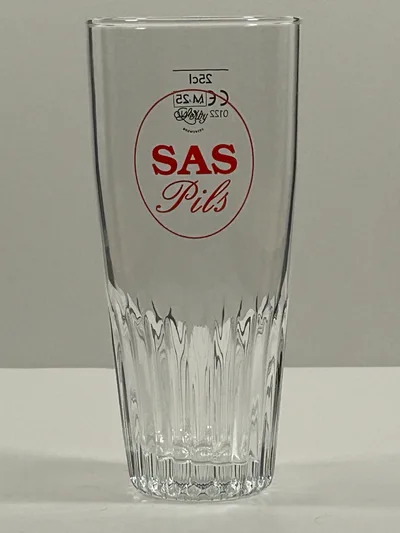
BBG006
SAS Pilsner
View exhibitTankard / Mug
A sturdy, handled glass designed for generous servings, an easy grip and robust everyday drinking.
Tankards and mugs are substantial drinking vessels characterised above all by their handle, allowing the beer to be held securely without warming the glass as directly with the hand. They usually have thick walls, a solid base and a broad opening, providing room for a generous head and making them particularly robust for everyday service. Traditionally associated with lager and other straightforward drinking beers, handled glasses are also used by Belgian breweries for a much wider range of styles and sometimes become distinctive pieces of brewery branding in their own right. Shapes vary from straight-sided mugs to heavier, rounded or highly decorated forms. The terms tankard, mug and stein are sometimes used interchangeably, although historically they can describe rather different vessels, materials and traditions.
Type Specimen
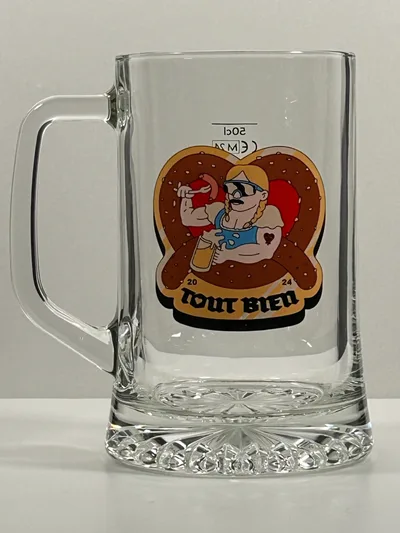
BBG118
Tout Bien Tankard
View exhibitTasting Glass
A small glass designed for sampling beer in modest servings while still allowing its aroma, appearance and flavour to be properly appreciated.
Tasting glasses are smaller versions of full-sized beer glasses, intended to serve enough beer for proper assessment without requiring a complete measure. Their designs vary considerably, but many use a stemmed or gently tapered form with sufficient space above the beer for aromas to develop and a head to form. They are particularly useful for brewery tastings, beer festivals and tasting flights, where several different beers may be sampled in succession. Some closely resemble miniature versions of familiar beer-glass styles; others are designed as versatile all-purpose glasses capable of presenting very different beers reasonably well. Size rather than one particular shape is therefore the defining characteristic of the category.
Type Specimen
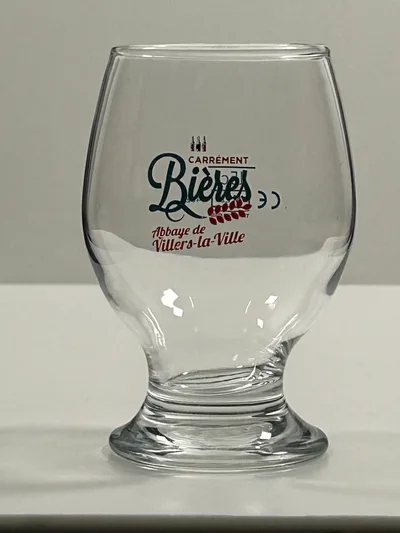
BBG051
Abbey de Villers
View exhibitTulip
A stemmed glass with a rounded bowl and narrowing rim, designed to concentrate aroma while supporting a generous foamy head.
Tulip glasses combine a rounded bowl with sides that narrow towards the rim before often flaring slightly outwards at the top. The bowl provides space for aromas to develop, while the narrower upper section helps concentrate them and supports the beer’s head. A stem keeps the drinker’s hand away from the bowl and gives the glass an elegant, balanced form. Tulips are particularly associated with aromatic and stronger Belgian ales, although their versatility has encouraged much wider use. Modern interpretations vary considerably in height, stem length and the degree of curvature, and the boundary between a tulip and other rounded stemmed glasses is not always precise.
Type Specimen
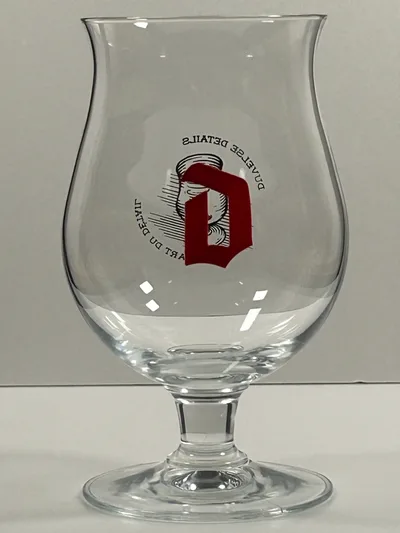
BBG032
Duvel
View exhibitWeizen
A tall, curving glass designed to showcase wheat beer’s lively carbonation, cloudy appearance and substantial foamy head.
Weizen glasses are tall and characteristically curving, usually narrowing through the lower body before widening towards the upper bowl and rim. Their height showcases the beer’s colour, cloudiness and rising carbonation, while the generous upper section provides space for the large, persistent head typical of many wheat beers. The narrower lower portion also makes a relatively large glass comfortable to hold. Closely associated with German wheat-beer traditions, the form is also used for Belgian wheat beers and other beers where breweries want to emphasise freshness, effervescence and a generous head. Variations range from strongly sculpted hourglass-like profiles to slimmer modern interpretations. The terms Weizen glass and wheat beer glass are commonly used for the same broad family of shapes.
Type Specimen
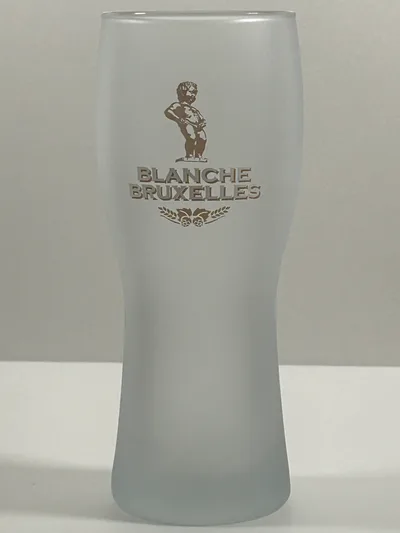
BBG072
Blanche de Bruxelles Frosted
View exhibitSpeciality / Novelty
A catch-all category for distinctive beer glasses whose unusual form or design sits outside the Museum’s standard glass styles.
Speciality and novelty glasses are defined less by a common shape than by their refusal to fit comfortably into one. They may use unusual proportions, sculpted forms, distinctive bases or other structural features created specifically for a particular beer or brewery. Some designs have a practical purpose, but others are primarily about identity, theatre or making the serving of the beer memorable. Belgium’s tradition of brewery-specific glassware has produced many examples that deliberately depart from familiar forms. This is therefore a deliberately broad category: it allows the Museum to describe genuinely unusual glasses without forcing them into a conventional classification that does not fit.
Type Specimen
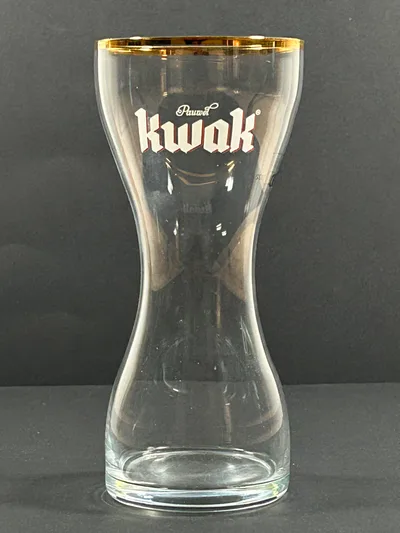
BBG016
Pauwel Kwak
View exhibit